It’s necessary for you to understand the time limits associated with personal injury claims in the UK. Failing to initiate your claim within the specified timeframe can result in losing your right to seek compensation. In this blog post, we’ll explore the key deadlines and factors that affect your claim duration, ensuring you are well-informed and prepared to take action when necessary.
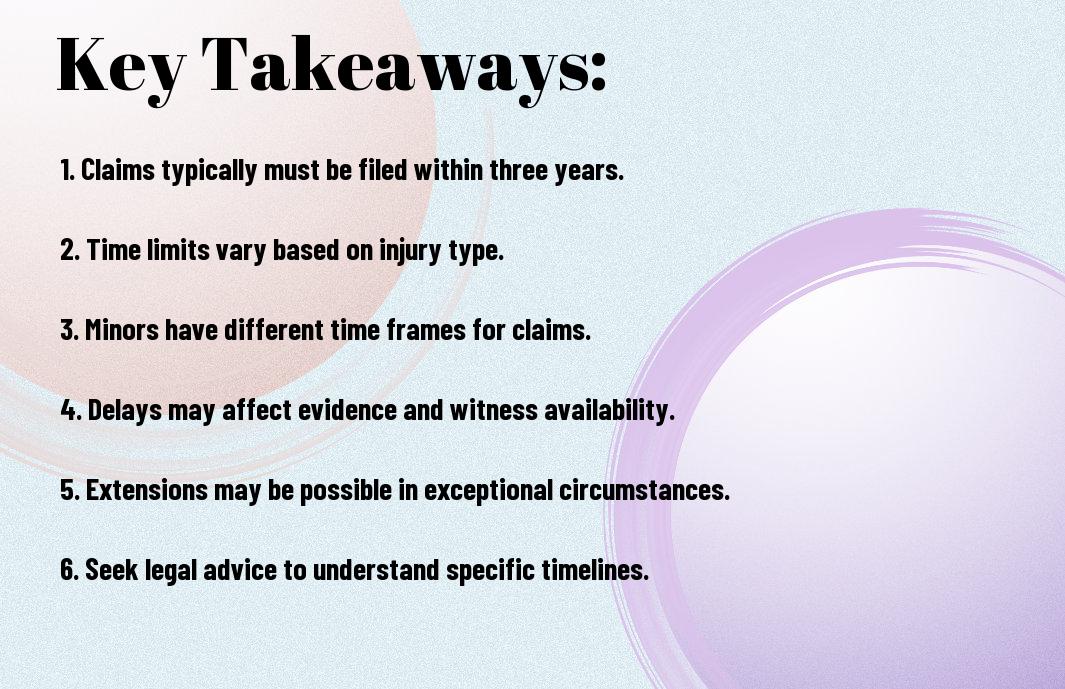
Key Takeaways:
- Deadline for Claims: Personal injury claims in the UK typically have a three-year time limit from the date of the injury or when the injury was first identified.
- Exceptions to the Rule: There are exceptions that can extend this time limit, such as claims involving minors or mental incapacity.
- Importance of Prompt Action: Initiating a claim sooner rather than later is advisable to ensure that evidence is preserved and that legal processes can be navigated effectively.
Overview of Personal Injury Claims
To understand personal injury claims, it’s imperative to grasp the time limits associated with them. Personal injury cases can arise from various incidents, such as slips and falls or workplace accidents. For detailed information on the timeframes, refer to this What Is The Personal Injury Claim Limitation Period?.
Definition and Types of Personal Injury Claims
Overview of personal injury claims includes various types that you may encounter:
| Road Traffic Accidents | Claims resulting from vehicle collisions. |
| Workplace Injuries | Injuries sustained in the work environment. |
| Medical Negligence | Claims arising from inadequate medical care. |
| Product Liability | Injuries caused by defective products. |
| Public Liability | Injuries occurring in public spaces. |
Assume that you need to identify which category your injury falls into to proceed effectively with your claim.
Importance of Timely Claims
After experiencing an injury, it is vital to act promptly when filing your claim. Time limits are set to ensure the process is efficient and fair for all parties involved.
Injury claims typically have specific deadlines that, if missed, can lead to the loss of your right to seek compensation. Filing promptly not only strengthens your case but also helps you gather imperative evidence while it’s still available. Additionally, acting within the time limit allows you to focus on recovery without the stress of impending deadlines affecting your claim.
Time Limits for Filing Claims
Now that you understand the importance of time limits in personal injury claims, it’s crucial to be aware of the deadlines for filing. In the UK, you typically have three years from the date of your injury or the date you became aware of your injury to submit your claim. Failing to act within this timeframe may result in losing your right to seek compensation.
Standard Time Frames
Behind the three-year rule, it is important to know that some cases may have different timeframes based on the specifics of your situation. For example, if your injury was due to a minor’s negligence or occurred while claiming for occupational disease, the deadlines may vary. Ensure you consult legal advice to clarify your unique circumstances.
Exceptions to the Rule
Limits on your claim’s filing period can be adjusted under certain circumstances. If you were under 18 when the injury occurred, the three-year limit starts when you turn 18, allowing you more time to pursue your case. Similarly, if incapacity affects your ability to file, the time extension may apply, enabling you to secure the compensation you deserve.
Due to various factors impacting the standard timeframes, exceptions can be quite significant. For instance, if your injury was not immediately apparent or arose from a prolonged exposure to harmful conditions, you could have more leeway. Additionally, specific cases involving mental health issues may allow for extended filing times. Consulting a legal professional can help you navigate these exceptions and ensure your claim can be properly pursued without risk of being time-barred.
Factors Affecting Time Limits
After an accident, you may encounter several factors that can influence the time limits for your personal injury claim. These include:
- The nature and severity of your injury
- The specific circumstances surrounding the incident
- Your age at the time of the injury
- Whether the injury was caused by negligence
The sooner you understand these factors, the better equipped you will be to navigate the claims process effectively.
Type of Injury
Besides how severe the injury is, the type of injury you sustain can also impact the time limits for your personal injury claim.
Discovery of Injury
Below the awareness of your injury can significantly influence how and when you file a claim. You might not recognize the full extent of your injuries right away.
It is important to note that in some cases, injuries may present symptoms only after a considerable time has passed. This delay means that the time limit for filing a claim could start from the moment you discover the injury rather than the date of the accident. By understanding this, you can better determine your course of action and assess when you should seek legal advice to ensure your rights are protected.
Legal Considerations
Despite the complexities surrounding personal injury claims, understanding the time limits and legal implications is imperative for claiming compensation effectively. Adhering to these timelines can significantly impact your case, making it vital for you to act quickly in seeking legal advice and gathering evidence. The law often imposes strict timeframes, and failing to file within these limits may result in your claim being dismissed, leaving you without the recourse you deserve.
The Role of Solicitors
At the outset of your claim, engaging a solicitor can prove invaluable in navigating the legal landscape of personal injury cases. A knowledgeable solicitor will guide you through the process, ensuring that you adhere to all relevant time limits, compile necessary documentation, and maximize your chances of obtaining a favorable outcome. Their expertise can alleviate much of the stress that accompanies legal proceedings, allowing you to focus on your recovery.
Court Procedures and Limitations
An understanding of court procedures and their limitations is imperative when pursuing a personal injury claim. Timeframes set by courts dictate how long you have to issue proceedings, typically three years from the date of the accident or injury. If you fail to initiate your claim within this period, you risk losing your right to compensation. It is advisable to file as soon as possible to allow ample time for any necessary legal adjustments or complications that may arise.
Plus, being aware of court procedures helps you prepare for potential challenges associated with your claim. Various factors, such as the nature of your injury and the evidence needed, may influence how quickly you can act. Additionally, certain circumstances, like minors or mental incapacity, can alter the time limits laid out by law. Therefore, it’s important to consult a solicitor early on to ensure you fully understand your situation and can navigate any complexities that may arise during the claim process.

Impact of Delayed Claims
Your decision to delay a personal injury claim can have significant repercussions on your case. As time passes, not only do you risk losing vital evidence, but you may also decrease the chances of a successful resolution. Understanding the consequences of inaction is necessary for safeguarding your right to seek compensation and ensuring that your voice is heard in the legal process.
Loss of Right to Compensation
The opportunity to pursue compensation may slip away if you wait too long to file your claim. In the UK, personal injury claims have strict time limits, typically three years from the date of the incident. Missing this deadline can mean that you lose your right to seek financial redress entirely, leaving you to shoulder the consequences without support.
Challenges in Gathering Evidence
After an incident occurs, collecting evidence is vital in substantiating your claim. Delays can hinder your ability to obtain critical information, such as witness statements and medical reports, which may become harder to secure as time passes. This can significantly weaken your case and reduce the likelihood of a favorable outcome.
Loss of evidence can cripple your case, as memories may fade and witnesses may become difficult to locate. Additionally, medical professionals might not recall specific details of your treatment after a significant period has passed. Furthermore, documentation like photographs or incident reports could be lost or become less accessible over time. All these factors highlight the importance of acting promptly to preserve evidence that strengthens your claim.
Steps to Take If You Miss the Deadline
Once again, if you miss the deadline for your personal injury claim, it’s important to act quickly. You should review your circumstances and gather any relevant evidence that might support your case. Consider consulting resources such as Personal Injury Limitation Period information for guidance on your options and next steps.
Potential Legal Options
By exploring the potential for exceptions to the limitation period, you might find ways to proceed with your claim despite the missed deadline. These exceptions may include circumstances where the injury was not immediately apparent or cases involving minors.
Importance of Seeking Legal Advice
At any point, pursuing legal advice can be valuable when addressing missed deadlines for your personal injury claim. A legal professional can clarify your situation and inform you of possible paths forward.
Potential avenues include filing for a late claim based on exceptional circumstances, but these can vary in complexity. Engaging with a solicitor can help you navigate the intricacies of the law, ensuring that you do not miss out on potential compensation through oversights or legal technicalities.
Final Words
To wrap up, understanding the time limits for UK personal injury claims is important for protecting your rights to compensation. Generally, you have three years from the date of the injury or knowledge of it to file a claim. However, exceptions may apply depending on the circumstances. It’s advisable to seek legal assistance promptly to ensure you adhere to these deadlines, as missing them can jeopardize your case. By staying informed, you empower yourself to take the necessary steps towards securing the compensation you deserve.
FAQ
Q: What is the general time limit for making a personal injury claim in the UK?
A: The standard time limit for making a personal injury claim in the UK is three years from the date of the injury or from the date when you become aware of the injury. It is important to initiate your claim within this timeframe to ensure your case is heard.
Q: Are there any exceptions to the three-year time limit?
A: Yes, there are exceptions to the three-year time limit. For instance, if the injured party is a child, the time limit does not start until they turn 18. Additionally, if a person lacks the mental capacity to make a claim, the time limit may be suspended until they regain capacity.
Q: What happens if I miss the time limit for my personal injury claim?
A: If you miss the time limit for your personal injury claim, you may be barred from pursuing legal action for that injury. However, in certain circumstances, you may still be able to argue for an extension, but this can be complex and is typically evaluated on a case-by-case basis.
Q: Can time limits for personal injury claims be different for specific types of injuries?
A: Yes, some specific types of claims may have different time limits. For example, clinical negligence claims may have more stringent time limits depending on the nature of the case and when the patient becomes aware of the negligence. It is advisable to seek legal advice to clarify any specific circumstances related to your injury.
Q: How can I ensure I make my personal injury claim within the time limit?
A: To ensure that you make your personal injury claim within the time limit, it is advisable to consult with a solicitor as soon as possible after the injury occurs. They can guide you through the claims process, help gather necessary evidence, and ensure that all documentation is filed timely to avoid missing important deadlines.




Recent Comments